
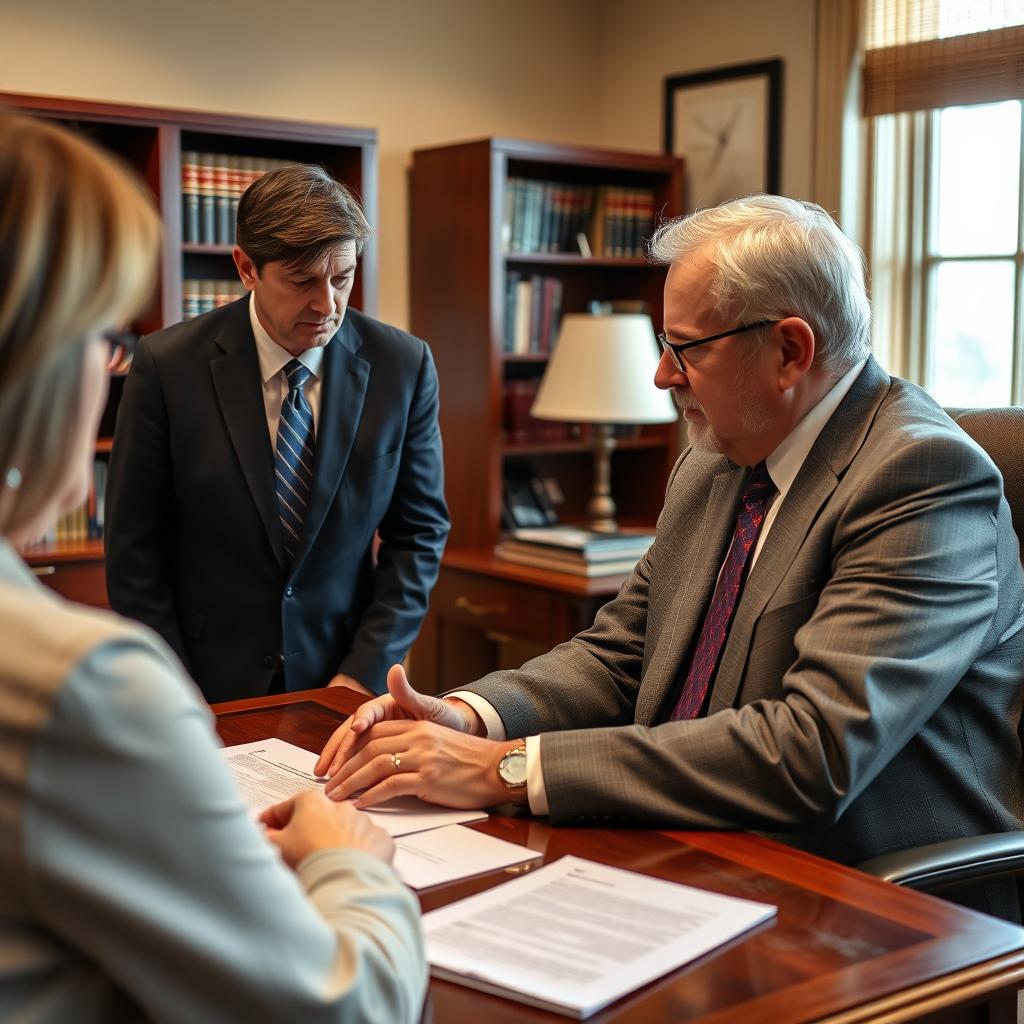
Estate Planning Lawyer Fairfax Virginia
Planning your financial legacy requires legal guidance that takes into account Virginia’s specific probate, trust, and tax framework. For individuals and families in Fairfax, an estate planning lawyer helps structure wills, powers of attorney, advance medical directives, and trusts so your intentions are carried out and your beneficiaries avoid unnecessary court proceedings. Mr. Sris, the Owner and Founder of Law Offices Of SRIS, P.C., draws on extensive combined legal experience with the firm’s Of Counsel attorneys to guide clients through the estate planning process. Our Fairfax location serves clients throughout Northern Virginia; to schedule a consultation, reach our firm at (888) 437-7747. Law Offices Of SRIS, P.C. – Advocacy Without Borders.
What Estate Planning Means in Fairfax
Estate planning in Fairfax is shaped by the Fairfax County Circuit Court, which oversees probate and trust matters, and by the broader Virginia statutory framework. The Fairfax County Commissioner of Accounts handles estate inventories and accountings, and the court requires fiduciaries to follow precise procedural steps. Because Fairfax County is a high-net‑worth jurisdiction with significant real property holdings and closely held businesses, estate plans must address Virginia’s probate tax structure and the qualitative division of assets between probate and non‑probate transfers. Our firm frequently appears in Fairfax County Circuit Court, working toward efficient administration and resolution.
Virginia’s trust and probate law—codified in Title 64.2 of the Virginia Code—governs how wills are admitted, executors are appointed, and testamentary instruments are interpreted. An experienced estate planning approach in Fairfax considers the interplay between federal transfer taxes, Virginia’s own estate‑tax repeal, and the portability of deceased‑spousal‑unused‑exclusion amounts. The firm’s Of Counsel attorneys help families draft revocable living trusts, pour‑over wills, and durable powers of attorney that reflect the client’s family situation and financial objectives. Because every estate is unique, the specific documents and strategies employed depend on the facts of each case.
How Mr. Sris and the Firm’s Of Counsel Attorneys Handle Estate Planning Cases
Mr. Sris and the firm’s Of Counsel attorneys begin an estate planning matter by evaluating the client’s assets, family structure, and health care preferences. The process typically involves drafting a comprehensive suite of documents—last will, financial power of attorney, and advance medical directive—and, where appropriate, establishing one or more trusts. Mr. Sris, who has practiced since 1997, brings familiarity with Fairfax’s probate procedures and the expectations of the county probate division, while the firm’s Of Counsel attorneys contribute additional perspectives on tax‑sensitive strategies.
When a trust is part of the plan, the client often serves as initial trustee, so careful drafting ensures the trust instrument transparently names successor trustees and outlines distribution standards. The firm handles trust funding, coordinating with financial institutions to re‑title accounts and deeds as needed. If a loved one has already passed, Mr. Sris guides executors and administrators through the probate process in Fairfax County Circuit Court, from qualifying as fiduciary to preparing the inventory and final account. The timeline varies by estate complexity and court scheduling. Mr. Sris and his Of Counsel bring extensive combined legal experience. Results may vary.
About Mr. Sris and the Firm’s Of Counsel Attorneys
Mr. Sris is the Owner and Founder of Law Offices Of SRIS, P.C., and has been practicing law since 1997. He is a former prosecutor with experience in both civil and criminal matters, and he represents individuals and families across Virginia, Maryland, the District of Columbia, New Jersey, and New York. Mr. Sris testified before the Virginia House Courts of Justice Committee in support of 2019 HB 635 (chief patron Del. David Bulova). His nearly three decades in the courtroom inform a practical approach to estate planning that anticipates potential challenges.
The firm’s Of Counsel attorneys work alongside Mr. Sris on estate planning matters, offering additional depth and varied professional backgrounds. Every attorney is Of Counsel to Law Offices Of SRIS, P.C., ensuring that each client’s matter benefits from collaborative review. For your estate planning needs in Fairfax, reach our firm at (888) 437-7747.
Frequently Asked Questions
What documents do I need for a basic estate plan in Virginia?
A basic Virginia estate plan includes a last will and testament, a durable power of attorney, an advance medical directive, and, in many cases, a revocable living trust to avoid probate. The will names an executor and beneficiaries; the power of attorney designates someone to manage finances if you become incapacitated; the medical directive states your health care preferences. These documents work together to cover both lifetime and post‑death decisions. An attorney can help you determine which additional instruments, such as pour‑over wills or beneficiary designations, suit your circumstances.
Do I need a lawyer to create a will in Fairfax County?
Virginia law does not require you to hire a lawyer to make a will, but an attorney helps ensure the will meets all statutory formalities and accurately reflects your estate planning goals. A poorly drafted will can be challenged in the Fairfax County Circuit Court, potentially experienced to family conflict and unnecessary expense. An experienced estate planning lawyer can structure the will to align with Virginia’s probate requirements and coordinate it with trust and beneficiary designations. For guidance, reach Law Offices Of SRIS, P.C. at (888) 437-7747.
How does probate work in Fairfax, Virginia?
Probate in Fairfax County is handled by the Circuit Court and supervised by the Commissioner of Accounts, who reviews the inventory and accounting filed by the executor. The executor presents the will for qualification, pays debts and taxes, and distributes assets according to the will’s terms or Virginia intestacy law. The process timeline depends on the estate’s complexity and the court’s docket. Many Fairfax families use trust‑based planning to minimize probate, as certain assets held in trust pass outside the court‑supervised process.
What is the difference between a revocable living trust and a will?
A will takes effect only after death and goes through probate, while a revocable living trust becomes active during your lifetime and assets transferred to the trust generally avoid probate court. With a trust, you can serve as trustee and retain control; upon incapacity or death, a successor trustee steps in without court intervention. In Virginia, a will still serves as a safety net to catch assets not titled in the trust. Which instrument—or combination—is appropriate depends on your estate size, family dynamics, and privacy concerns.
Can I change my estate plan after it’s signed?
Yes, you can amend or revoke your estate planning documents as long as you have the required mental capacity. A revocable living trust can be amended by a written instrument signed by the settlor; a will can be replaced with a new will or altered by a codicil executed with the same formalities as a will. Power of attorney and advance medical directive documents can also be updated at any time. Because life events frequently prompt changes, it is advisable to review your plan periodically with your attorney.
What happens if I die without a will in Virginia?
If you die intestate, Virginia’s intestacy statute determines who inherits your property, which may not align with your wishes. The statute provides a hierarchy: typically, a surviving spouse receives the entire estate if there are no descendants, or a share if there are descendants from both the marriage or outside it. Without a will, the court also appoints an administrator, and the process may involve greater court supervision. To avoid this outcome, contact Law Offices Of SRIS, P.C. at (888) 437-7747.
Fairfax Wills Attorney
Fairfax Trusts Lawyer
Probate Lawyer Fairfax
Power of Attorney Lawyer Fairfax
Virginia Primary Sources:
Virginia Code Title 64.2 – Wills, Trusts, and Estates
Fairfax County Circuit Court
Virginia Judicial System
Attorney advertising. Prior results do not guarantee a similar outcome.
Results may vary.
Case results depend on a variety of factors unique to each case.