
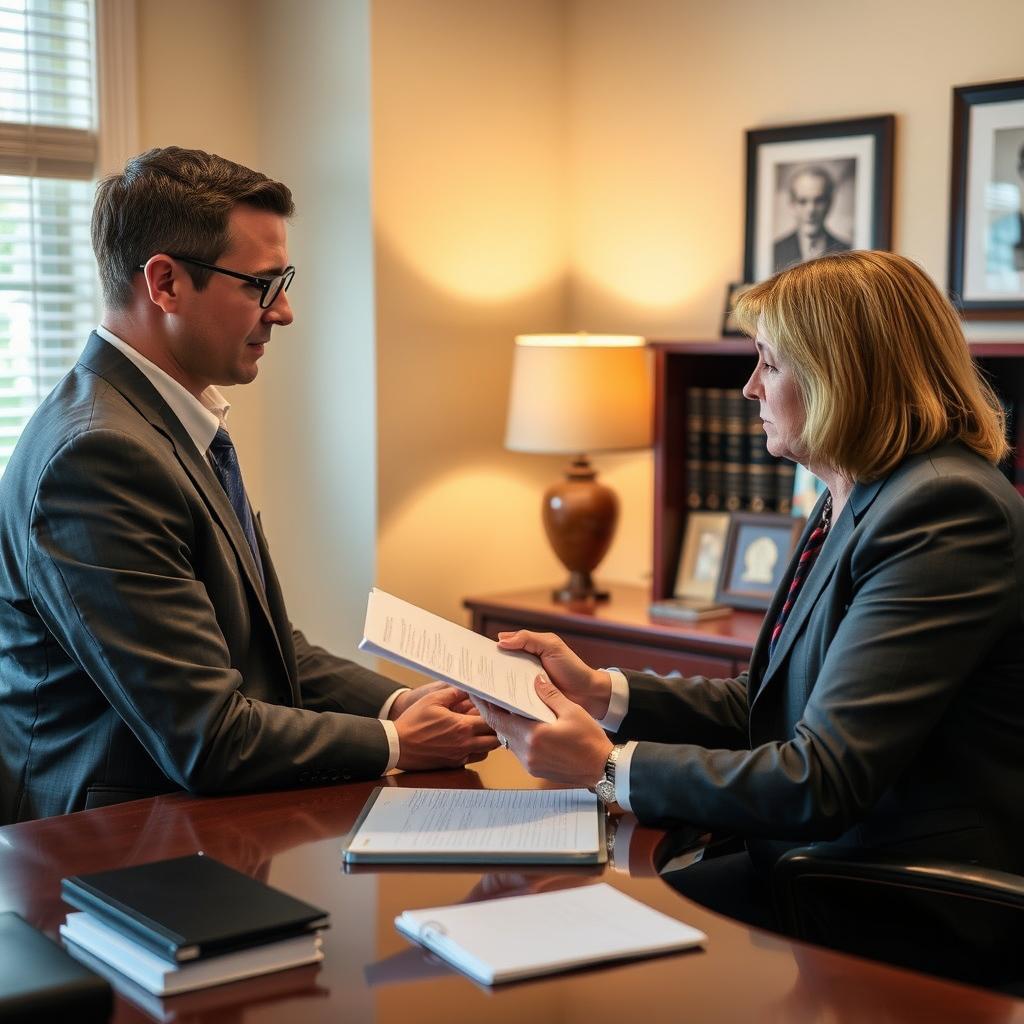
Protective Order Violation Lawyer Manassas, VA
An allegation that you violated a protective order in Manassas, Virginia, is a serious criminal charge, not a minor misunderstanding. Under Virginia Code § 16.1‑253.2, a first‑offense violation is a Class 1 misdemeanor punishable by up to twelve months in jail and a fine of up to $2,500. A third or subsequent violation within a twenty‑year period elevates the charge to a Class 6 felony, exposing you to one to five years of incarceration and the long‑term loss of firearm rights. These matters are prosecuted by the Commonwealth’s Attorney in the Manassas General District Court for misdemeanor violations, and in the Manassas Circuit Court for felony violations or appeals. The penalties are severe, and a conviction creates a permanent criminal record that can affect employment, housing, professional licenses, and immigration status. Because the same conduct can give rise to both a criminal charge and a civil enforcement proceeding, it is critical to seek experienced legal counsel early. Law Offices Of SRIS, P.C., founded in 1997, represents clients in Manassas protective order violation cases. Reach the firm at (888) 437‑7747 to request a consultation.
What Protective Order Violation Means in Manassas
Virginia protective orders are issued under Title 16.1 of the Virginia Code and prohibit the respondent from contacting, harming, or going near the protected person. The order may be an emergency protective order, a preliminary protective order, or a permanent protective order. Regardless of the type, a knowing violation of any term—including accidental contact, a missed communication, or a location proximity breach—can result in arrest and prosecution. In Manassas, the Manassas General District Court at 9311 Lee Avenue, Suite 230, handles first‑offense misdemeanor cases. Felony cases, including third or subsequent violations, proceed in the Manassas Circuit Court. The Commonwealth’s Attorney prosecutes the state’s case, and the court does not participate in plea negotiations. However, under Virginia Supreme Court Rule 3A:8, the defense and the prosecutor may discuss charges, and an agreed resolution can be presented to the judge.
Beyond the immediate criminal sanctions, a protective order violation conviction carries collateral consequences. A finding of guilt can affect firearm possession rights, security clearances, and employment in fields that require a clean background check. The charge is also reported to the Virginia Criminal Information Network and may appear on a public background search. Additionally, a conviction can be used in future family‑law matters, including custody and visitation. Because the underlying protective order may have been entered in a civil proceeding where the rules of evidence differ, the factual record may not be fully developed. An experienced attorney can examine the basis of the order, the circumstances of the alleged contact, and any procedural irregularities that could lead to a dismissal or reduction.
How Mr. Sris and the Firm’s Of Counsel Attorneys Handle Protective Order Violation Cases
Mr. Sris, a former prosecutor, understands how the Commonwealth builds its case. He and the firm’s Of Counsel attorneys begin by obtaining the complete court file—including the original protective order petition, service records, and any law enforcement reports—to identify weaknesses in the state’s proof. Common defenses in a protective order violation case include lack of proper notice, absence of intentional contact, insufficient evidence of the prohibited conduct, or a legally defective order. The firm’s analysis includes an examination of whether the alleged contact was truly prohibited by the terms of the order and whether any exception—such as third‑party contact that was not reasonably avoidable—applies.
Once the factual and legal defenses are assessed, the firm’s attorneys engage with the prosecutor to discuss resolution options. Because Virginia judges cannot participate in plea negotiations, the defense must take the initiative in presenting mitigating factors: a clean prior record, the minor nature of the alleged violation, or the accused’s voluntary enrollment in a counseling program. If a negotiated resolution is not in the client’s best interest, the case proceeds to trial. At trial, the firm’s attorneys challenge the evidence through cross‑examination of the petitioner and any law enforcement witnesses, and present an affirmative defense if supported by the facts. Throughout the process, the client is informed of each development and the strategic reasoning behind every decision.
About Mr. Sris and the Firm’s Of Counsel Attorneys
Mr. Sris founded Law Offices Of SRIS, P.C. in 1997. As a former prosecutor, he brings insight into how the state builds its case and evaluates the charges. He is licensed in Virginia, Maryland, the District of Columbia, New Jersey, and New York. His legislative experience includes testifying before the Virginia House Courts of Justice Committee in support of 2019 HB 635 (chief patron Del. David Bulova). This background in criminal law and legislative process informs his approach to defending clients charged with protective order violations.
The firm’s Of Counsel attorneys bring extensive combined legal experience. They handle matters in Manassas and across Northern Virginia, drawing on knowledge of local court practices and the expectations of the Commonwealth’s Attorney’s office. Every client’s case is evaluated on its own facts, and the defense strategy is tailored to the specific circumstances of the alleged violation. Mr. Sris and the firm’s Of Counsel attorneys work to achieve the most favorable result possible under the law. Results may vary.
Frequently Asked Questions
How does a Virginia lawyer defend against protective order violation charges?
An experienced attorney examines the underlying protective order, the evidence of the alleged violation, and any procedural errors to build the strong $1. The defense may challenge whether the defendant had proper notice of the order, whether the contact was truly prohibited, or whether the accusation is based on a misunderstanding. In Virginia, the Commonwealth must prove each element of the offense beyond a reasonable doubt. If the order was entered without a full hearing or the alleged conduct falls outside the order’s terms, the charge may be reduced or dismissed. The firm’s attorneys also evaluate constitutional issues, such as overbreadth or vagueness of the order’s restrictions.
What should I do if I am facing protective order violation charges in Manassas, Virginia?
Contact a criminal defense attorney immediately, and do not discuss the details of the case with anyone except your lawyer. Avoid contacting the protected person or any potential witnesses, as even well‑intentioned communication can be used as evidence of a new violation. Gather any documents that may be relevant—text messages, emails, location data, or witness names—and provide them to your attorney. The initial court date at the Manassas General District Court is often the arraignment, where you enter a plea. Having an attorney present at that first hearing is critical to protecting your rights and preserving defenses. Early involvement also allows your lawyer to request discovery, evaluate the evidence, and engage in discussions with the prosecutor before an irrevocable plea is entered.
What are the penalties for a protective order violation in Manassas, Virginia?
A first‑offense protective order violation is a Class 1 misdemeanor, carrying up to twelve months in jail and a fine of up to $2,500. A second offense within twenty years is also a Class 1 misdemeanor. A third or subsequent violation within twenty years becomes a Class 6 felony, punishable by one to five years in prison—or, at the jury’s discretion, up to twelve months in jail and a fine of up to $2,500. Additional consequences may include GPS monitoring, loss of firearm rights, and a permanent criminal record. The court may also extend or modify the existing protective order. Each conviction is reported to the Virginia State Police and appears on a background check for employment, housing, and licensing.
Will a protective order violation conviction affect my ability to own a firearm?
A conviction for violating a protective order can result in the loss of firearm rights under both Virginia and federal law. In Virginia, a felony conviction permanently prohibits firearm possession. A misdemeanor conviction for violating a protective order may trigger a separate civil order surrendering firearms and may affect future firearm purchase background checks. Under federal law, if the underlying protective order was issued after a hearing and prohibits the use, attempted use, or threatened use of physical force against an intimate partner, the defendant may be subject to the prohibition on firearm possession under 18 U.S.C. § 922(g)(8). Because the interplay between state and federal law is complex, it is important to discuss the specific nature of the order and the conviction with your attorney.
Can protective order violation charges be dropped in Manassas?
A protective order violation charge may be dismissed or reduced if the evidence does not support the allegation, if the underlying order was defective, or if the Commonwealth agrees to amend the charge. The Commonwealth’s Attorney can move to nolle prosequi the case if the alleged victim declines to testify or if the proof is insufficient. An experienced attorney can present mitigating information and legal arguments early in the process to persuade the prosecutor that a dismissal is appropriate. If the case is weak, the attorney may file a motion to dismiss at the pre‑trial stage. Even if a dismissal is not possible, negotiating an amendment to a non‑criminal infraction or a lesser offense can avoid the most serious collateral consequences.
What court handles protective order violation cases in Manassas?
Misdemeanor protective order violation cases are heard in the Manassas General District Court; felony cases and appeals from the General District Court go to the Manassas Circuit Court. Both courts are located at 9311 Lee Avenue, Suite 230, Manassas, VA 20110. The General District Court has jurisdiction over Class 1 misdemeanors and conducts preliminary hearings for felony charges to determine whether there is probable cause to certify the case to the grand jury. The Circuit Court then has jurisdiction over the felony trial and any subsequent appeals. The judge assignment and court schedule are set by the court’s calendar. For guidance on your specific situation, reach Law Offices Of SRIS, P.C. at (888) 437‑7747.
Related legal resources: Criminal defense lawyer Fairfax County · Criminal lawyer Prince William County · Criminal lawyer Manassas Park · Criminal lawyer Falls Church · Criminal lawyer Fairfax City
Official sources: Virginia Code Title 16.1 — Courts Not of Record · Manassas General District Court — Court information · Virginia Judicial System — vacourts.gov
Attorney advertising. Prior results do not guarantee a similar outcome. Results may vary.
Case results depend on a variety of factors unique to each case.